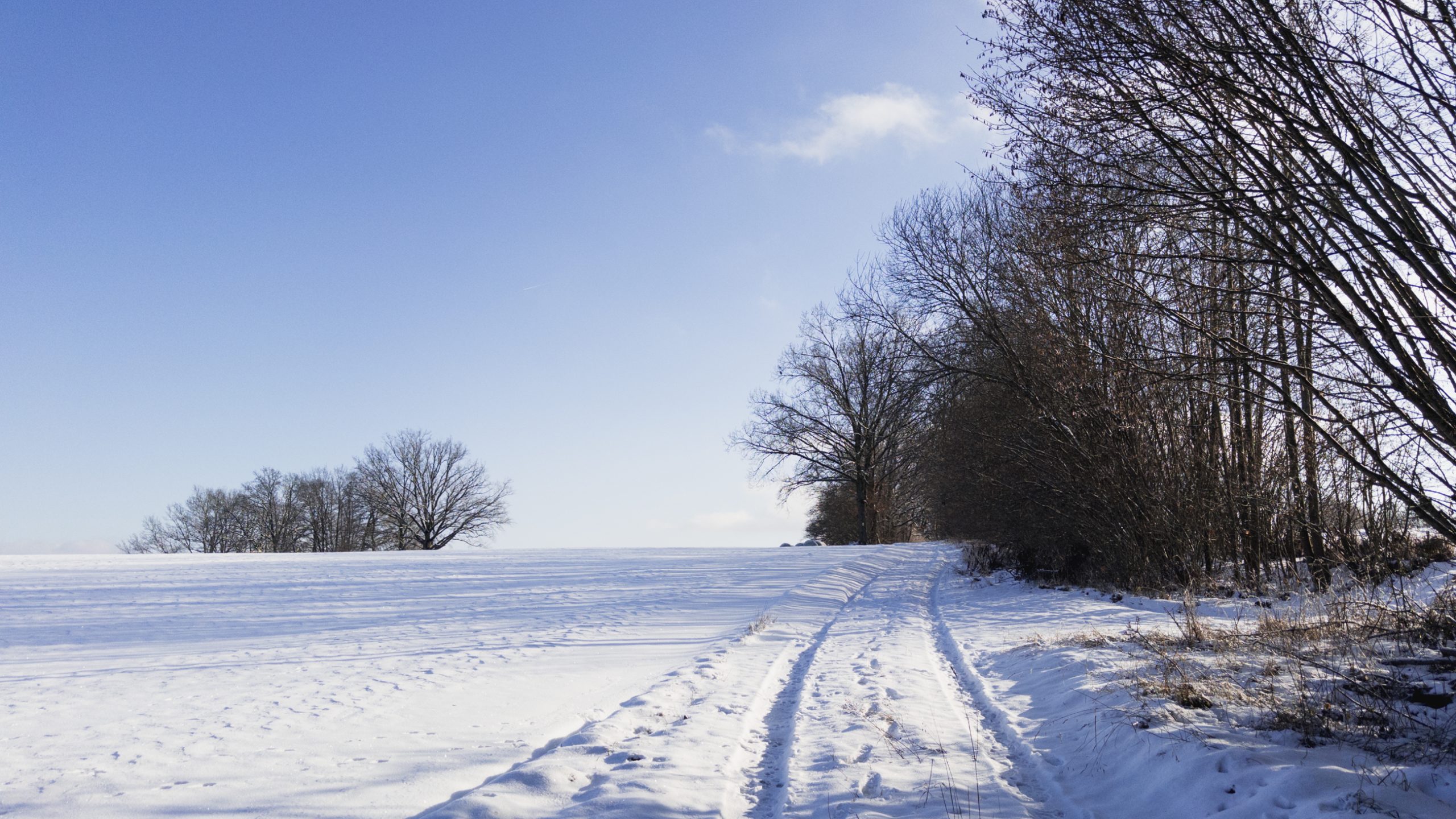

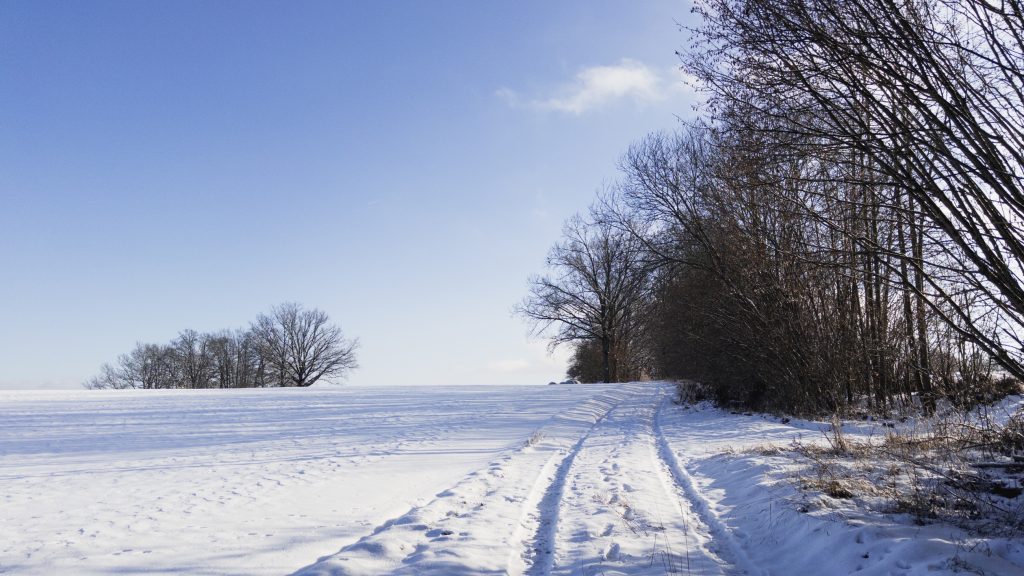
This Chapter was filmed in January on the Ochsenkopf in the Fichtelgebirge, and in the Steinwald, in northern Bavaria.
January is a month I tend to keep close. After the movement and noise of the previous year, it offers a natural pause. The days are short, the light stays low, and the landscape asks less of you. In winter, I am less interested in covering distance and more interested in spending time, returning to familiar ground and letting it unfold slowly.
When snow settles over the uplands and forests, everything changes its scale. Paths soften, edges blur, and sounds seem to fall away. Walking becomes quieter and more careful. You notice your breathing, the crunch underfoot, the way the forest holds sound rather than carrying it. The landscape feels smaller, but also more complete, as though it needs less explanation.
These are the conditions I feel most comfortable working in. There is less to react to and less pressure to keep moving. Instead of chasing light or scenes, I can stay with what is already there. Winter strips things back and makes it easier to see what matters.
Light in January sits low and lingers. It moves slowly across the day, never quite lifting itself high enough to flatten the land. Details stand out more clearly. The line of a branch, the weight of snow resting on stone, the contrast between dark forest and open ground. Simple things begin to carry more weight when there are fewer of them.
The Ochsenkopf, familiar in other seasons, feels different under snow. The summit takes on an ethereal quality, detached from the usual sense of place. At times it feels oddly distant, as though you have stepped into somewhere removed from everyday life, a place defined more by light and space than by geography.
Working here in winter is less about making something happen and more about allowing something to emerge. Much of the time is spent walking, stopping, and waiting. Letting the place settle before lifting the camera. The cold encourages patience. You do not rush because rushing feels out of place.
The snow does not change the character of this part of Bavaria so much as make it easier to see. With colour muted and movement slowed, the underlying structure of the land becomes clearer. Forests feel denser, paths feel older, and the relationship between stone, trees, and ground comes forward.
The Steinwald carries the same quiet presence. It is a landscape that rewards unhurried attention. Forest tracks wind gently rather than pushing straight through. Snow gathers unevenly, revealing the shape of the land beneath it. There is a sense of long continuity here, of people having passed through these woods for centuries, even when no one else is around.
January also brings a different way of seeing familiar places. When the usual markers are softened or hidden, you navigate by instinct and memory rather than landmarks. A bend in the path, a change in trees, the feel of the ground underfoot. It becomes a more physical way of moving through the landscape.
This film grew out of that way of working. From spending time rather than covering ground. From returning to the same places and allowing small changes in light, weather, and mood to shape what emerged.
It is a quiet and unhurried piece, shaped by winter walking and low light rather than by any sense of destination. If that way of looking suits you, you may find something here that feels familiar.